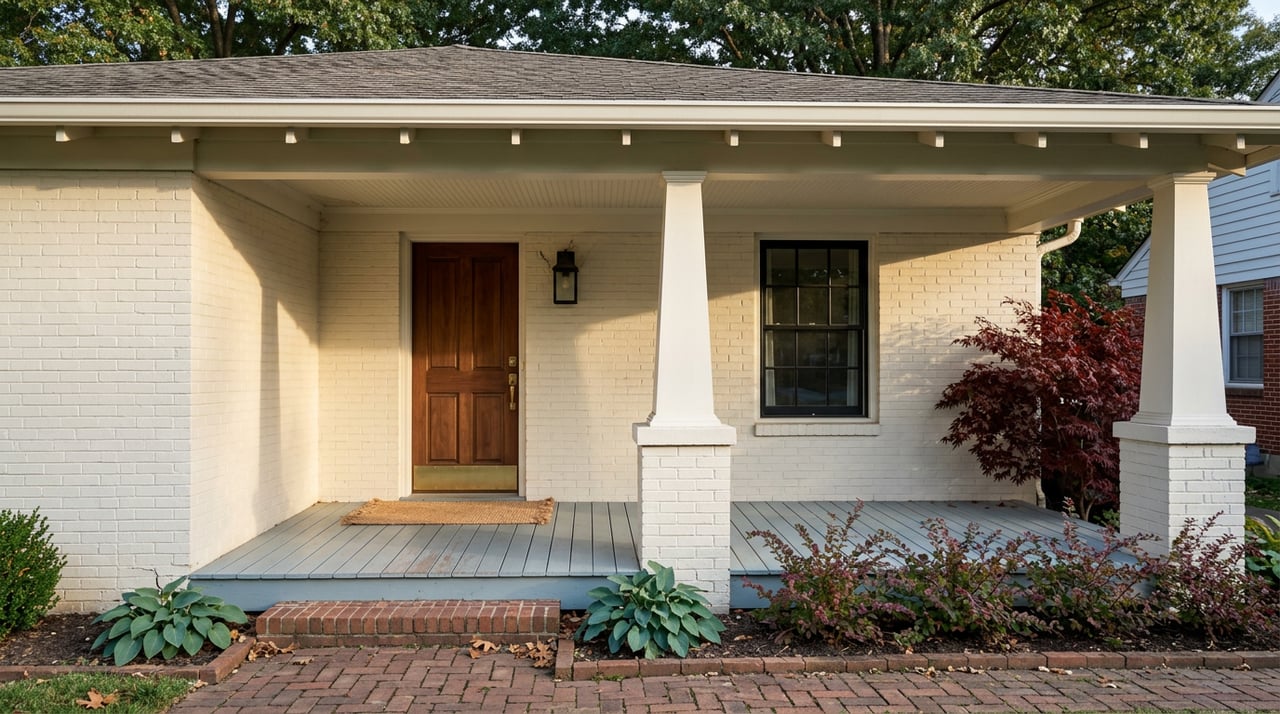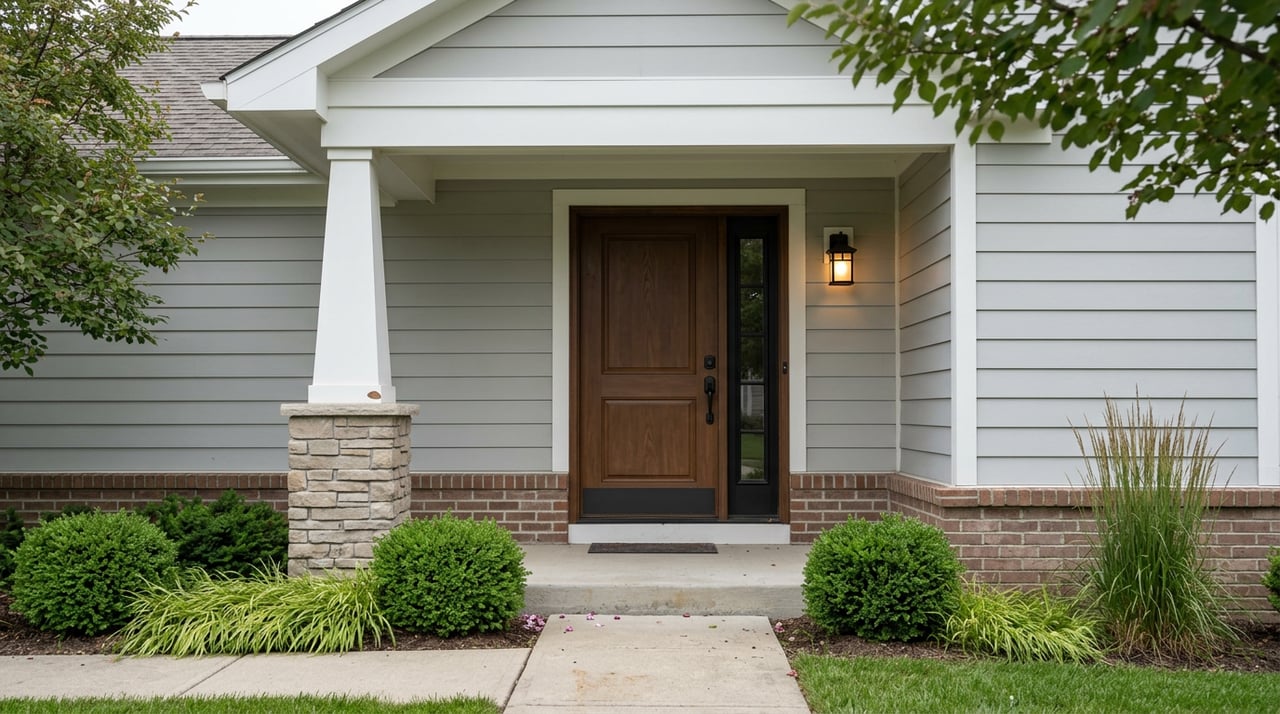
Pull up new-construction listings in Westfield under the name "Monon Corner" and you will find a home priced at $365,995. Scroll a little further and you will find another one, in the same corridor near 191st Street and Horton Road, priced at $508,000. Same name. Same stretch of Westfield. A gap of more than $140,000 between them.
That gap is not a typo and it is not a fluke of timing. It is two different builders using the same community name for two different products, and it is the clearest example of a problem that shows up across Westfield's entire $400,000 to $700,000 band: the label on a listing tells you almost nothing about what you are actually comparing.
The name is doing less work than the price tag suggests
Arbor Homes is building single-family and ranch homes at Monon Corner starting in the $365,995 to $411,995 range, part of its Arbor Series aimed at buyers who want a straightforward path into a new build with amenities like a community pool and pickleball courts. Beazer Homes is building a separate section also called Monon Corner, with 76 single-family homes priced from roughly $450,000 to $508,000, positioned as a higher-spec product in the same general footprint.
If you are comparing "Monon Corner pricing" as a single data point, you are comparing two different builders' entire strategies without knowing it. One is competing on entry-level accessibility. The other is competing on finish level and lot size. Neither number is wrong. Neither is representative of the other. A buyer who calls a builder's sales office asking about "the Monon Corner price" without specifying which company is asking a question that does not have one answer.
This is not unique to that one intersection. Aberdeen's Cornerstone Collection starts from $510,995. Harvest Trail of Westfield's Executive Collection starts from $704,990. Four names, four price floors, all inside city limits, all marketed under the umbrella of "new construction in Westfield." The floor plan sheet is real. The number on it is real. But it describes one builder's one product line in one phase of one community, not the market.
| Community | Builder | Starting Price (2026 builder listings) |
|---|---|---|
| Monon Corner, Arbor Series | Arbor Homes | $365,995 – $411,995 |
| Monon Corner | Beazer Homes | $450,000 – $508,000 |
| Aberdeen, Cornerstone Collection | — | From $510,995 |
| Harvest Trail of Westfield, Executive Collection | — | From $704,990 |
Prices reflect starting figures published by the builders as of spring 2026 and are subject to change by lot, elevation, and phase.
What the citywide median is quietly averaging over
Westfield's median sale price reached $489,000 in February 2026, up 17.4 percent year over year. That is the number most buyers see first, and on its own it suggests a market moving in one direction at one speed. But the same February data showed days on market nearly doubling, from 43 days a year earlier to 69 days, while the count of homes sold that month fell to 77 from 106 a year prior.
Price climbing while sales volume cools and time on market stretches is not a contradiction. It is what happens when a citywide median blends segments that are behaving differently. A resale home in an established subdivision like Chatham Hills, Viking Meadows, or Harmony sells on a different clock than a builder-controlled new-construction lot, because the builder controls release pacing, incentive timing, and comparable pricing across its own phases in a way no individual resale seller can. Average the two together and you get a median that describes neither one accurately.
The incentive nobody puts on the sign
Here is the part that catches buyers off guard during the actual transaction. Say you are looking at a $600,000 resale home in an established Westfield neighborhood. Before writing an offer, it is worth checking what nearby builders are asking for homes in the same $600,000 to $650,000 band, because a builder in that range may be offering financing incentives or closing-cost assistance that effectively lowers the real cost below the published price. The resale home, meanwhile, may offer a better lot, mature landscaping, and upgrades already completed, none of which show up as a line-item discount but all of which have real value.
Neither option is automatically the better deal. The point is that the sticker price on a builder's website is a starting position, not a final number, and the gap between sticker and all-in cost changes depending on where a community sits in its sales cycle. Builders tend to offer their strongest grand-opening incentives when a community first launches, to build sales momentum, and again toward closeout, when only a handful of lots remain and the builder wants to clear inventory before moving crews to the next phase. A buyer comparing "base price" across two communities without asking which phase each one is in in is comparing two different discount structures as if they were fixed prices.
Why the next ten years of supply changes the math
This is the part that most comparisons of new construction versus resale leave out entirely, and it is specific to Westfield right now in a way it was not two years ago.
In March 2026, the Westfield City Council approved the Ironstone planned unit development on a narrow 4-3 vote, clearing the way for developer Platinum Properties to build roughly 2,200 homes across 765 acres in the Hortonville area over the next 10 to 15 years. The plan splits into neighborhoods called The Lakes, The Village, and The Reserve, anchored by a mixed-use hub called Horton Square, an amenity lake, and roughly 14 miles of internal trails. Separately, Westfield's Grand Park Zoning District, moving through the city's Plan Commission through mid-2026, outlines a framework for up to 3,784 residential units alongside office, retail, and hotel space clustered around the Grand Park Sports Campus.
Together those two pipelines represent a decade-long wave of new supply entering price bands that overlap directly with the communities in the table above. That matters for both sides of the new-construction-versus-resale decision. A buyer choosing new construction today is locking in a home before that wave of competing new inventory arrives and potentially reshapes pricing in nearby phases. A buyer choosing resale today is buying into a comp set that will spend the next decade competing against a steady stream of new product a few miles away, which is a different long-term position than buying resale in a neighborhood with no comparable pipeline behind it.
Neither position is wrong. But a comparison built only on today's price tags, without accounting for what is entitled and under construction nearby, is missing the variable that will do the most to shape resale value five and ten years out.
What this actually means at the $500,000 line
At $500,000 in Westfield today, the honest framing is not "new construction versus resale" as two clean categories. It is a specific builder's specific phase in a specific corridor, compared against a specific resale listing's condition and lot, with a decade of entitled new supply already approved somewhere nearby. The name on the sign is a starting point for a conversation, not the answer to it.
That is the kind of comparison worth doing carefully before an offer goes in, not after.
A short FAQ for buyers comparing new construction and resale in Westfield
Is new construction actually cheaper than resale in Westfield right now? Not consistently. Builder base prices can look lower than resale, but incentives, lot premiums, and design-studio upgrade costs move the real all-in number, and that number shifts depending on where a community sits in its sales cycle. A resale home with finished landscaping and completed upgrades can end up costing less in total than a base-priced new build once options are added.
Does the Ironstone approval affect a home I'd buy today? Not immediately. Ironstone's build-out is expected to run 10 to 15 years, so it will not change nearby comps this year. It is a factor worth weighing for anyone thinking about resale value five or more years out, since it adds sustained new-construction competition to the northwest side of the city over that window.
Why do two communities with the same name have such different prices? Because they are built by two different companies operating in the same corridor, each running its own product line, phasing, and incentive structure independently of the other. The shared name is a location marker, not a shared price point.
If you are trying to work out what a specific budget actually buys across Westfield's builder communities and resale neighborhoods, that is exactly the kind of comparison Estansion Group by BLP sits down and runs line by line. Schedule a free consultation and we will walk through the current builder incentives, phase timing, and resale comps that apply to your number, not the citywide average.